New Production Institute
The New Production Institute (NPI) emerged from the interdisciplinary research group Value Creation Systematics at the Laboratory of Production Engineering (LaFT) of the Faculty of Mechanical Engineering at Helmut Schmidt University/University of the Federal Armed Forces Hamburg (HSU/Uni Bw H).
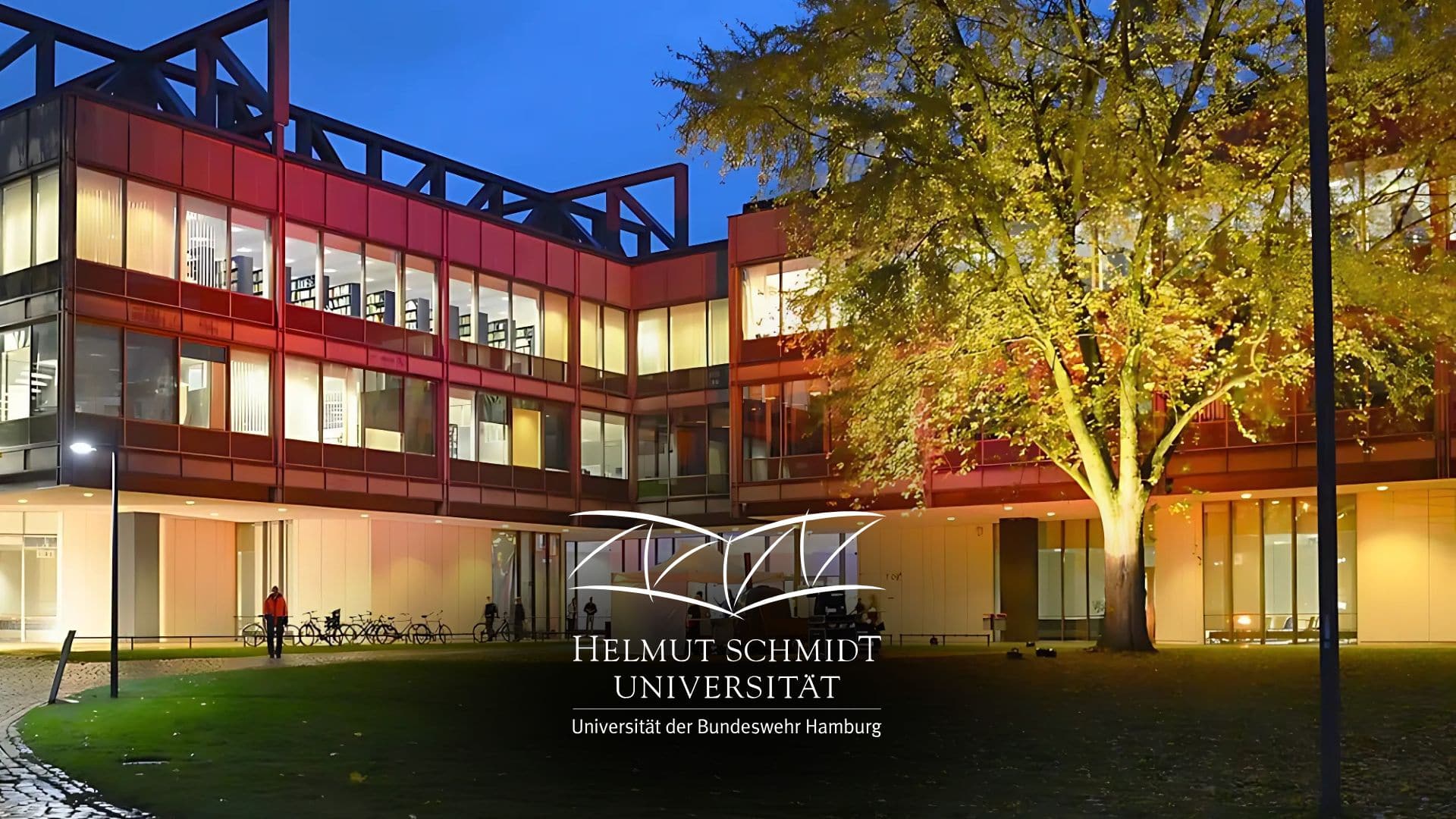
Helmut Schmidt University / University of the Federal Armed Forces Hamburg is one of two universities of the Federal Armed Forces in Germany, alongside its partner university in Munich. It was founded in 1972 on the initiative of the then Minister of Defence Helmut Schmidt and today has around 2,100 students, 130 professors and 1,250 employees. With its four faculties and strong links to Hamburg’s scientific and business communities, it strengthens Hamburg as a centre of research and trains managers for complex tasks in an international environment.

Laboratory of Production Engineering
The Laboratory of Production Engineering is part of the Faculty of Mechanical Engineering at Helmut Schmidt University. In close cooperation with research and industrial partners, three working groups conduct research and development in the fields of microproduction, robotics and automation, value creation systems, and new technologies and materials.
New Production Institute
RESEARCH
- Production for the circular economy
- Distributed development and production
- Sustainable production methods for urban value creation
- Open source machine tools
- Knowledge and innovation management in companies and networks
APPLICATION
- Establishment and operation of open production facilities
- Innovation and idea competitions
- Development methodology for open source machine tools and their documentation
PROJECTS
- dtec.bw: FabCity – Decentralised digital production for urban value creation
- EU/EFRE: INTERFACER The digital infrastructure for Fab Cities
- BMBF: Value Creation Radar – AI-supported tools for identifying and analysing value creation-related signals
- BMBF: Places of Incubovation
- GIZ: Digital4jobs
Robotics and automation
RESEARCH
- Methods for workplace design, production planning and technology assessment
- Design of human-machine systems such as exoskeletons
- Methods for designing and evaluating human-centred technologies
- Functional, situational and behavioural adaptive systems engineering
- Modelling and simulation of human-machine systems
- Evaluation of biomechanical and technical effects in applications involving human-machine interaction
APPLICATION
- Customised support technologies for various applications in, for example, the automotive and aviation industries, logistics and skilled trades
- Planning and design tools for science and users
- Conducting laboratory and field studies to evaluate workplaces and technologies
- Transfer of results into standardisation processes and strategy development
PROJECTS
- EVO-MTI dtec.bw: Environment for the development of physical support systems
- KIKU dtec.bw: AI-based, wearable body support systems
- ExoMePT: Hybrid models for the development of technical systems for direct interaction with humans, using the example of power tools and upper body support systems (funded by the DFG)
- Exoskeletons for CBRN applications
Additive manufacturing and lightweight construction
RESEARCH
- lightweight composite construction
- Additive manufacturing technologies and reverse engineering
- Automated lightweight construction technologies
- Ecologically efficient production systems
APPLICATION
- Automated lightweight construction technologies for the aviation industry
- Additive manufacturing for medicine and specialist medical training
- Additive manufacturing and reverse engineering for defence technology and military medicine
- Ecologically efficient production systems for the aviation industry
PROJECTS
- LaiLa – Laboratory for Intelligent Lightweight Construction Production (dtec.bw)
- Use of additive manufacturing for the production of bone and organ surrogates (WTD52)
- AddiMuK – Additive Manufacturing and Reverse Engineering for Defence Technology (WIWeB Erding)
- Thermoplastic bonding – Structural bonding of fibre-reinforced high-performance thermoplastics (WIWeB)
- ZEDi – Development of 3D-printed components for hydrogen distribution in aircraft (LuFo VI.3)
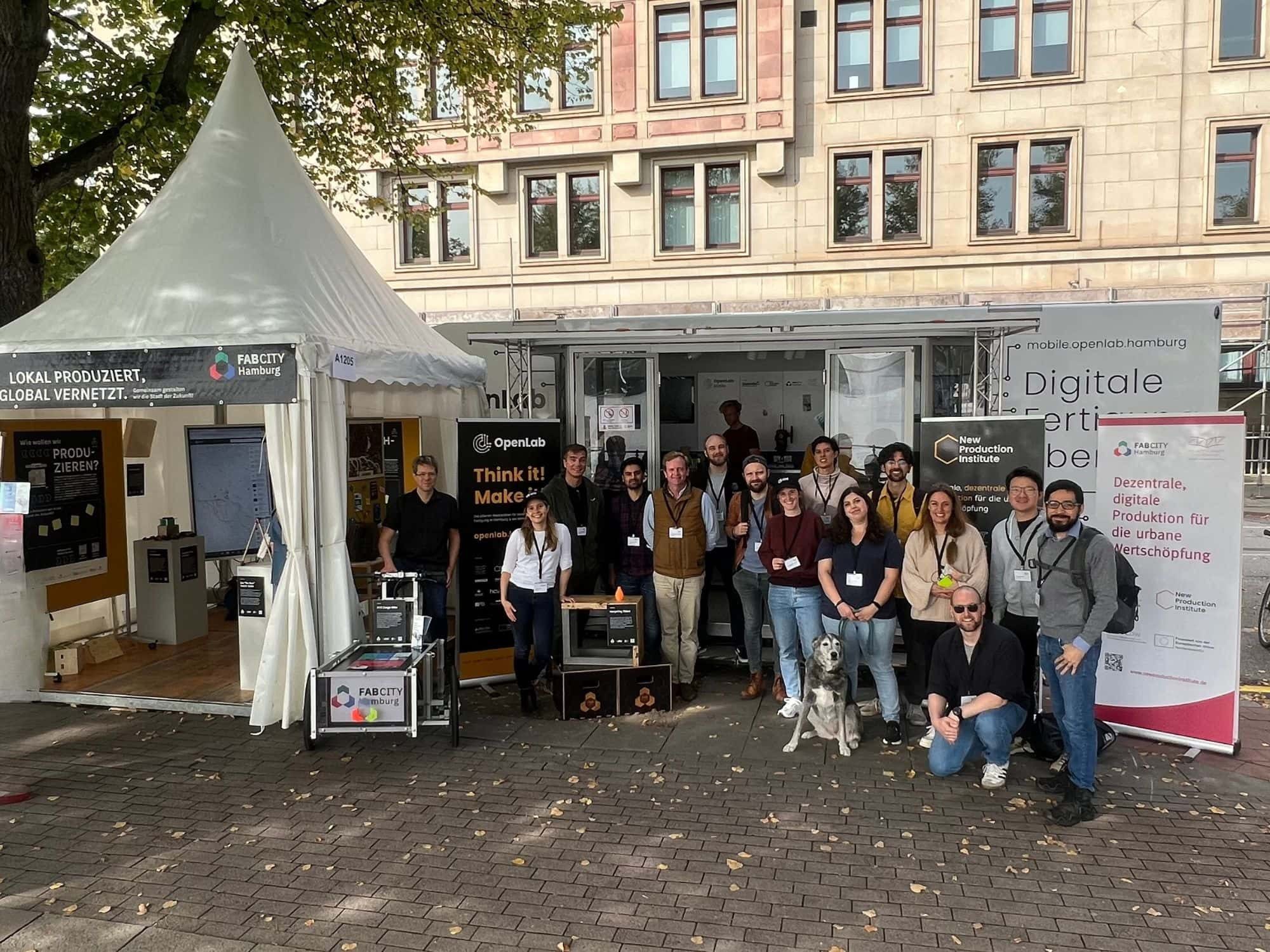
As a think tank for the future of production and value creation The New Production Institute is dedicated to researching and shaping the transformation of industrial value creation systems in the context of digital transformation. Its focus is on the potential of new forms of networking and production, as well as the systematic Operationalisation of openness in innovative value creation models. This includes, in particular, concepts such as open innovation, open design, open production and open source, whose practical implementation and scientific foundation are the focus of a wide range of research and transfer projects.
Interdisciplinary team
In this context, new value creation patterns are being researched, incorporating findings from the following areas:
- Design and value creation theory
- Mechanical engineering and manufacturing technology
- Knowledge and social economy
- Participatory research
- Economic geography
- Law
The institute’s employees have many years of national and international project experience and have access to a wide range of network and project partners, as well as numerous memberships in scientific and industrial associations and knowledge clusters.
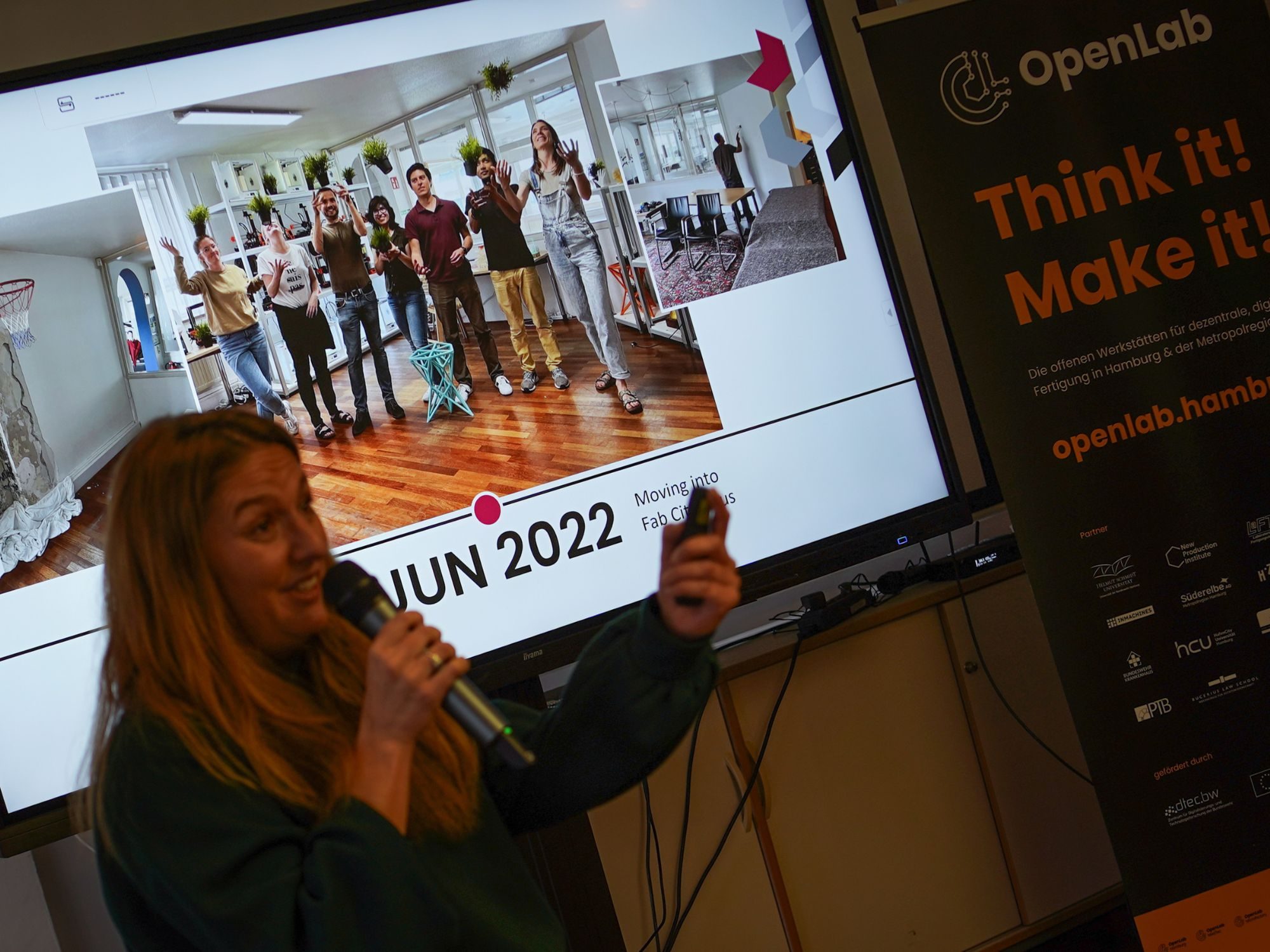
Community workspace ‘Fab City House’
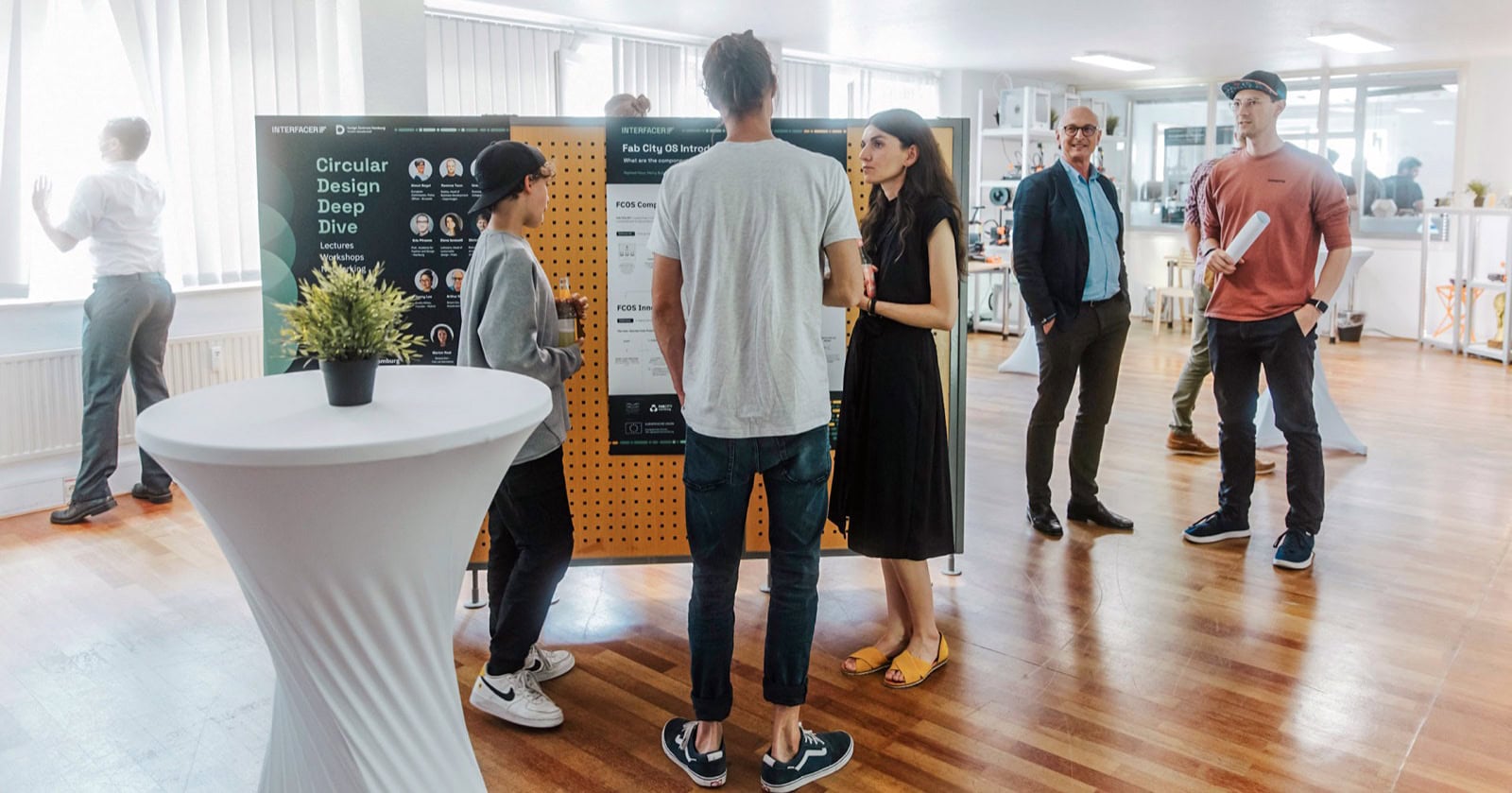
The ‘Fab City House’ is a research and learning environment for open and local production: innovation, research and education in the field of digital production under one roof. Our workspace is located on the third floor in the rear courtyard of a historic office building from the late 19th century in the listed Nobelshof building complex.
Covering more than 400 m², the Fab City House has a showroom for open source hardware, areas for holding workshops and spaces for concentrated work.
The community consists of researchers, associations and start-ups from the fields of 3D printing, knowledge management, economic development and education transfer. Here we work together on interdisciplinary and application-oriented projects for Fab City Hamburg. Due to research projects, the premises are not open to the public or continuously occupied. This means that there are no fixed opening hours and no staff on site. Visits to the premises are only possible in consultation with our Fab City Haus contact person Daniel Salgado-Moreno.
Adresse:
Fab City Haus
Zippelhaus 5a
20457 Hamburg